




Old West Ham United Stadium: What happened to Upton Park?
Lost Grounds · 6 September 2025 · 5 min read
Carsten Germann
West Ham United and its old stadium Upton Park – The era of modern arenas caught up with the East End London club in May 2016. After more than 110 years, West Ham United moved from its long-standing Boleyn Ground in the London district of Upton Park to the Olympic Stadium. The last date with the "Old Girl", as the stadium was affectionately called by fans, was painful.
It was important to leave the soon-to-be-demolished stadium on Green Street with dignity. West Ham had played here from 1904 to 2016.
"One of my work colleagues organized the match, he had done something similar before and was straight back in," says West Ham fan Paul Drew from Romford to event-breaks.com, "it was magical to play on the sacred turf. Over all the years with West Ham, I had only once been on the pitch before – when I ran on as a kid to congratulate the players."
The Boleyn Ground near Green Street was more than "just" an English football stadium. It was a forge of legends, triumphs, and the home of four of England’s 1966 World Cup winners.
West Ham Old Stadium: “No West Ham, no World Cup”
When England narrowly missed out on turning their semi-final appearance into a title win at the 2018 World Cup in Russia – their first semi-final since 1990 – jokers like Paul Drew came to a clear conclusion, which he sent to his entire circle of friends via WhatsApp: "No West Ham, no World Cup" – along with a photo of the celebrating 1966 England team with captain Bobby Moore, and the mourning "Three Lions" from Moscow.
England’s coach Gareth Southgate hadn’t selected a single “Hammers” player for the World Cup finals…
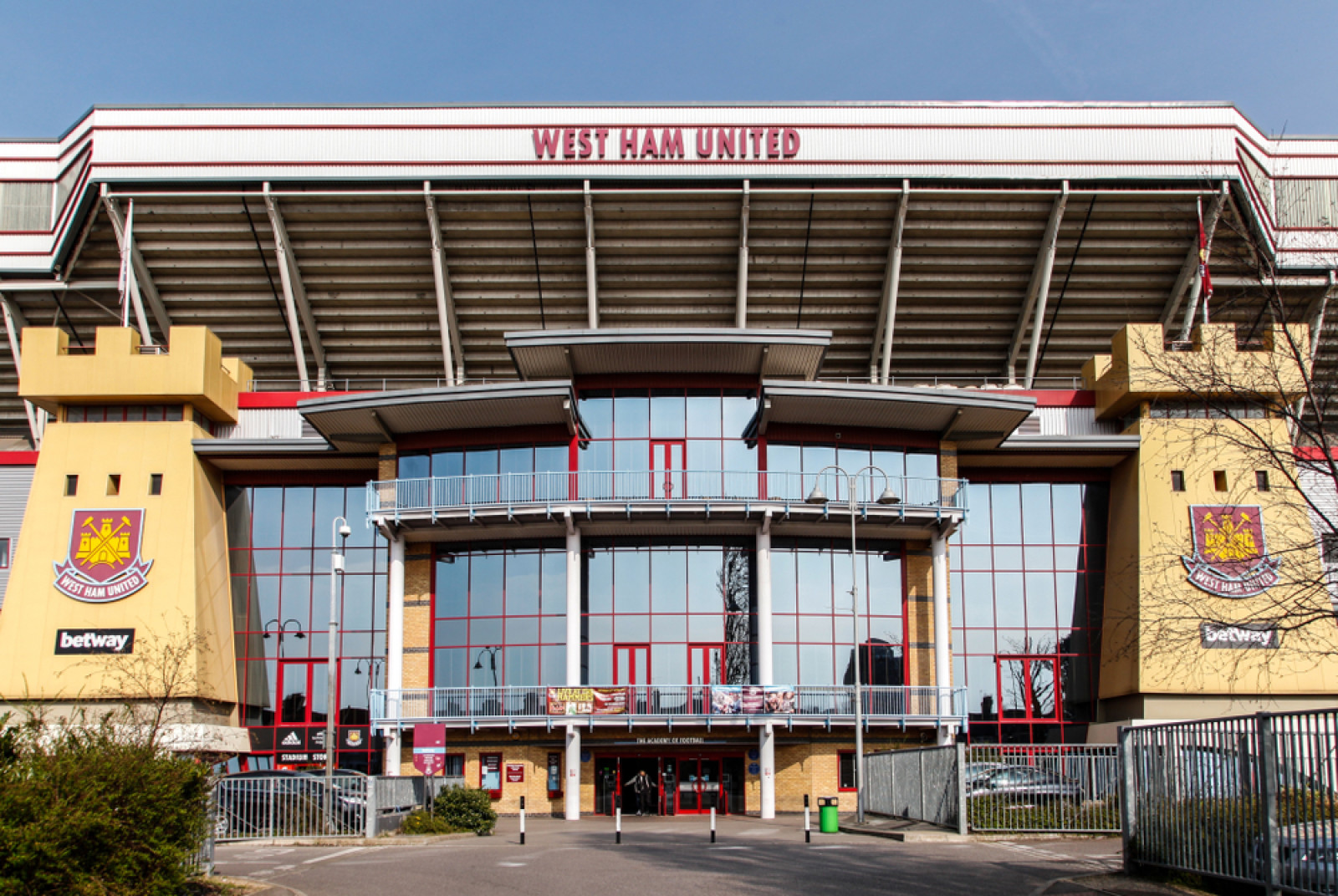
View of the Dr. Martens Stand with its characteristic castle towers at West Ham United’s Boleyn Ground. Photo: Shutterstock
Upton Park London: Emotions and Memories
Still, just like the World Cup is the stuff of dreams for the long-suffering supporters of the English national team, so too was West Ham United’s final competitive match at the Boleyn Ground on May 10, 2016, full of emotional moments.
"Today is a sad and a happy day," tweeted West Ham fan Spencer Owen right before the final match at the old stadium against Manchester United, "today marks a beginning and an end, today we say goodbye to our old home and move into a new stadium."
Mark Wright saw it less optimistically: "A sad day! Upton Park is part of so many memories in my life. As a child, I came here with my father and brother – and still do to this day."
Stewart Potter said he was “emotionally prepared for this day.” His view: “You needed nerves of steel to get through this match emotionally. Two of the last games we played at the Boleyn Ground were against teams favored by the bookmakers. To come back from 1–2 to win 3–2 and end an era like that – it doesn’t get better. It was a day I’ll remember for the rest of my life.”
Paul Drew on the old and new West Ham United stadiums: “My friends and I usually go to the pub first to let the main crowd clear. The atmosphere in the Olympic Stadium will never match Boleyn, because Boleyn was a fortress. Even if the Olympic Stadium were converted into a proper football stadium, it would still never come close to the magic of the Old Girl.”
Well, such renovations have not happened to this day, and so the desire for a better stadium atmosphere at London Stadium remains unfulfilled nearly a decade later.
Why is the Boleyn Ground called Upton Park?
The stadium was built in 1904, designed by Henri Pillipe Tiite Parker, after the club was given the land by the “London District of Upton Park.”
The so-called "Green Street House" was used as a school on this site. Due to its connection with Anne Boleyn, the second wife of King Henry VIII who was executed in 1536, the building – once belonging to her – was also known as Boleyn Castle. Although the stadium was officially called Boleyn Ground, it was more commonly referred to as Upton Park.
Easy to remember, as the nearest underground station to the stadium and Green Street is Upton Park (City, District and Hammersmith lines) – not West Ham…
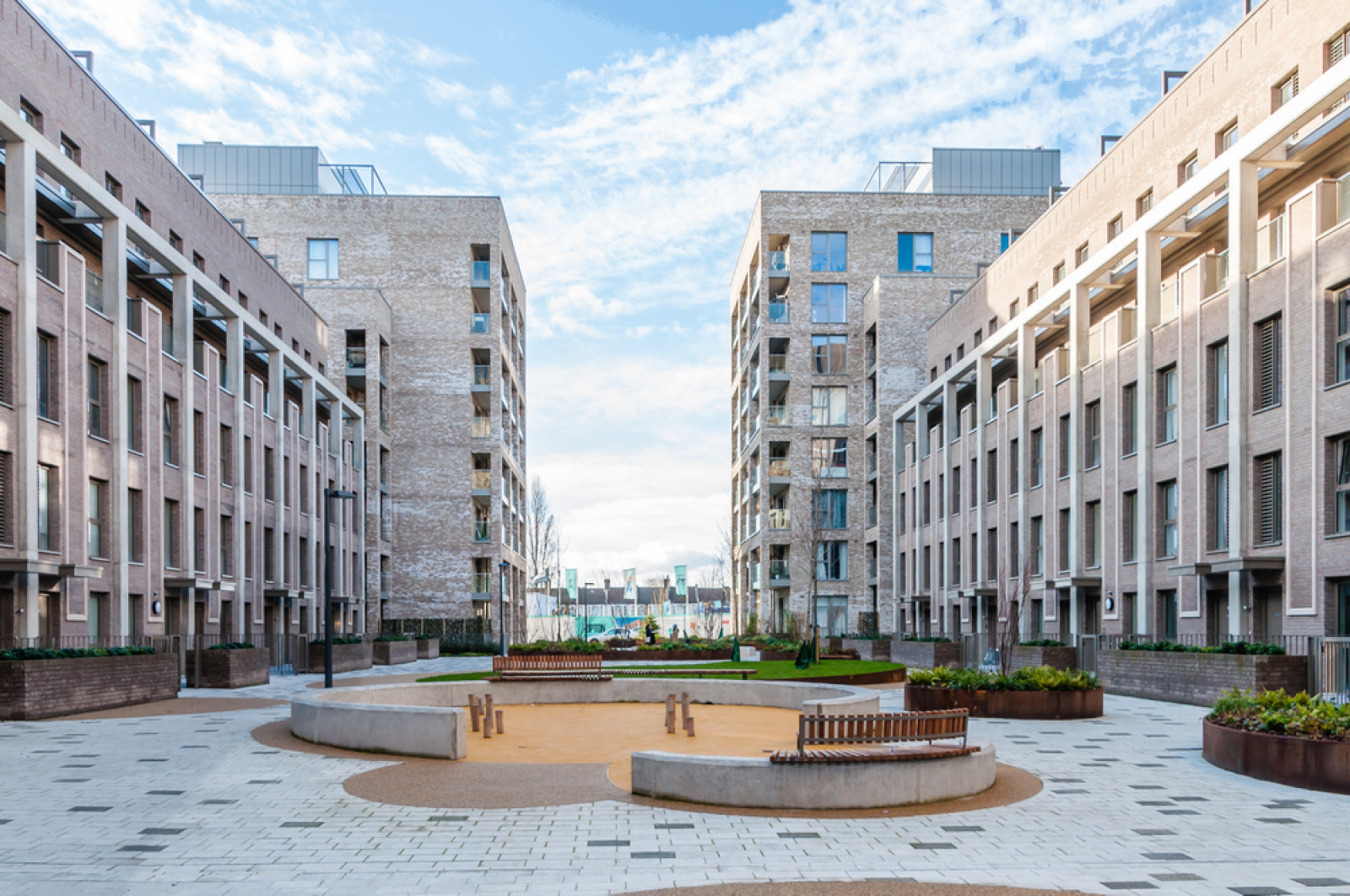
Modern, urban apartments now stand on the site of the old West Ham stadium. Photo: Shutterstock
What was built at Upton Park?
For some years now, the motto around Upton Park has been "Better Living in the East End.” On the site of the former West Ham stadium – which I visited on November 25, 2006, with former hooligan and now author (e.g. Terrace Legends, Trolsen Verlag, 2005) Cass Pennant during an interview in London before a 1–0 win against Sheffield United – a total of 842 exclusive flats had been built by 2022.
15 buildings of varying heights were arranged around three large communal gardens.
What is Upton Park famous for?
The old West Ham stadium Upton Park was also used as a temporary home by London club Charlton Athletic in the 1991/92 season.
The Dr. Martens Stand (Main Stand), renovated in 2001, held around 15,000 spectators. It had two tiers and featured two stylized castle towers at the entrance, with the “Irons” crest as a trademark.
On Green Street, where the stadium once stood, there is still a bronze statue featuring West Ham’s World Cup heroes Sir Geoff Hurst, Bobby Moore († 1993), Martin “The Ghost” Peters († 2019), and Ray Wilson († 2018) – a must-see for fans and football travellers. It’s worth it.
Don't miss an update
Get selected highlights about sports, events and travel - short, relevant, no spam.